Step 5: Add the Garlic and Ginger
Once the vegetables have started to soften, add the minced garlic and freshly grated ginger to the hot pan.
Stir constantly for approximately 30 seconds. The goal is to release their aroma without allowing them to burn. Garlic can become bitter quickly when cooked at very high heat, so keep everything moving.
Step 6: Return the Beef to the Pan
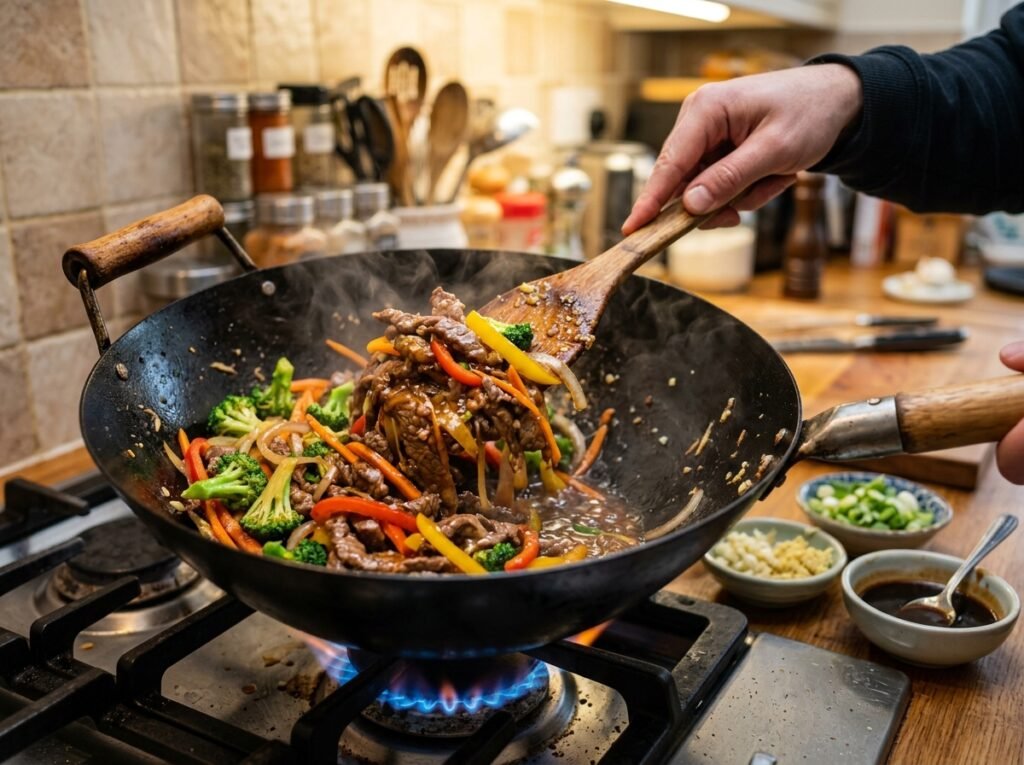
Add the cooked beef back into the skillet with the vegetables.
Toss everything together so the beef is evenly distributed among the vegetables.
At this point, the ingredients should already look colorful and aromatic.
Step 7: Add the Stir-Fry Sauce
Give the prepared sauce a quick stir because some ingredients may have settled at the bottom of the bowl.
Pour the sauce around the hot sides of the pan and immediately toss the beef and vegetables together.
The heat of the pan will quickly warm the sauce and help it coat the ingredients.
Step 8: Thicken the Sauce
Stir the cornstarch mixture once more and add it gradually to the skillet.
Toss everything continuously for approximately 30 seconds to 1 minute.
The sauce should become glossy and slightly thicker, coating the beef and vegetables without becoming overly heavy.
If the sauce becomes too thick, add a small splash of water and toss again.
Step 9: Finish and Serve
Turn off the heat once the beef and vegetables are evenly coated.
Taste the stir-fry and adjust the seasoning if necessary. Because the sauce already contains soy sauce and oyster sauce, additional salt may not be needed.
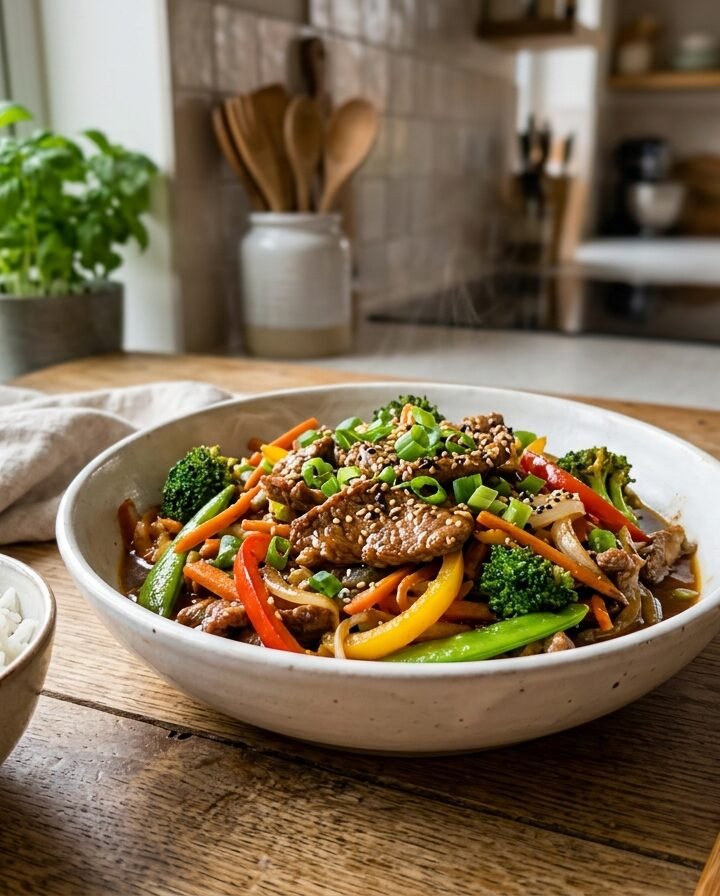
Serve the beef stir-fry immediately over steamed rice or your favorite noodles.
How to Keep Beef Tender
Tender beef is one of the most important parts of a good stir-fry. Fortunately, several simple techniques can help.
Slice Against the Grain
Look closely at the beef and identify the direction in which the muscle fibers run. Slice across those fibers rather than parallel to them. This shortens the fibers and makes each bite easier to chew.
Slice the Beef Thinly
Thin slices cook quickly and are less likely to become tough. If the beef is too thick, the outside can become overcooked before the center is ready.
Don’t Overcook It
Beef cooks quickly in a very hot wok. Once the slices have developed a browned exterior and reached a safe level of doneness, remove them from the pan.
Remember that the beef will return to the hot pan later, so cooking it for too long during the first stage can result in a tough final texture.
Best Vegetables for Beef Stir-Fry
The beauty of a stir-fry is that you can easily change the vegetables depending on what’s available.
Broccoli
Broccoli provides a pleasant crunch and works particularly well with savory sauces. Cut the florets into relatively small pieces so they cook quickly.
Bell Peppers
Red, yellow, orange, and green bell peppers all work well. They add color, sweetness, and a slightly crisp texture.
Carrots
Thinly sliced carrots add natural sweetness and color. Cutting them thinly helps them cook at the same rate as the other vegetables.
Mushrooms
Mushrooms add a rich savory flavor. Cook them over high heat until their excess moisture evaporates and the edges begin to brown.
Snap Peas
Snap peas provide a fresh crunch and require very little cooking time.
Cabbage
Thinly sliced cabbage works especially well in stir-fries. It softens quickly while retaining some texture.
Easy Beef Stir-Fry Variations
Spicy Beef Stir-Fry
Add red pepper flakes, sliced fresh chili, chili garlic sauce, or another preferred hot sauce to the stir-fry sauce.
Start with a small amount and increase it according to your preferred spice level.
Honey Garlic Beef Stir-Fry
Increase the honey slightly and add an extra clove of garlic for a sweeter and more aromatic sauce.
Beef and Mushroom Stir-Fry
Replace some of the vegetables with sliced mushrooms. Cook the mushrooms over high heat until they develop a golden-brown exterior before adding the remaining ingredients.
Beef and Broccoli Stir-Fry
For a simpler version, use beef and broccoli as the main ingredients and prepare a slightly larger batch of the savory sauce.
Ginger Beef Stir-Fry
Increase the amount of freshly grated ginger for a warmer, more aromatic flavor.
Common Beef Stir-Fry Mistakes to Avoid
Overcrowding the Pan
One of the biggest mistakes is putting too much beef into the skillet at once. Overcrowding reduces the temperature and causes the meat to release moisture instead of searing.
If necessary, cook the beef in two batches.
Using Wet Beef
Pat the beef dry before cooking. Excess surface moisture can interfere with browning.
Cutting With the Grain
Slicing along the muscle fibers can make the beef seem tougher. Whenever possible, identify the grain and slice across it.
Cooking Vegetables Until Mushy
Stir-fried vegetables should generally retain some texture. Avoid cooking them for too long.
Adding Too Much Sauce
Too much sauce can make the dish watery and overpower the flavor of the beef and vegetables. Add enough to coat the ingredients without drowning them.
Burning the Garlic
Garlic should be added relatively late in the cooking process because it cooks much faster than many vegetables.
How to Serve Beef Stir-Fry
Steamed white rice is one of the simplest and most popular ways to serve beef stir-fry. Jasmine or long-grain rice works particularly well because the grains remain light and separate.
You can also serve the stir-fry over brown rice if you prefer a heartier whole-grain option.
Noodles are another excellent choice. Toss cooked noodles directly with the finished beef and vegetables for a complete noodle stir-fry.
For a lighter meal, serve the beef and vegetables on their own or alongside a fresh cucumber salad.
How to Store Leftover Beef Stir-Fry
If you have leftovers, transfer them to a clean airtight container and refrigerate them promptly.
For best quality, enjoy refrigerated leftovers within a few days and reheat them thoroughly before serving.
If you’re storing the beef separately from rice or noodles, use separate airtight containers. This can help maintain better texture when reheating.
How to Reheat Beef Stir-Fry
The stovetop is usually the best way to reheat stir-fry.
Place the leftovers in a skillet over medium heat and add a small splash of water. Stir occasionally until everything is heated through.
You can also use a microwave. Place the food in a microwave-safe container and heat it in short intervals, stirring between each interval.
Avoid overheating the beef because excessive reheating can make it tougher.
What to Serve With Beef Stir-Fry
Beef stir-fry is already a complete meal, but several side dishes can complement it nicely.
- Steamed jasmine rice
- Brown rice
- Egg noodles
- Steamed dumplings
- Asian-style cucumber salad
- Steamed edamame
- Simple vegetable soup
- Fresh fruit
Frequently Asked Questions
What is the best beef for stir-fry?
Sirloin and flank steak are popular choices because they can be sliced thinly and cook quickly. Other relatively tender beef cuts can also work when sliced properly.
Why is my beef tough?
Beef can become tough when it is cut incorrectly, sliced too thickly, overcrowded in the pan, or overcooked. Slice against the grain, use thin pieces, and cook quickly over high heat.
Can I use frozen vegetables?
Yes. Frozen vegetables can be convenient, especially for busy weeknight meals. Allow excess moisture to evaporate during cooking and avoid adding too many frozen vegetables at once.
Can I make this stir-fry without oyster sauce?
Yes. Oyster sauce is optional in this recipe. You can leave it out and adjust the soy sauce or use another suitable stir-fry sauce according to your taste.
Can I make beef stir-fry ahead of time?
You can prepare the vegetables, sauce, and sliced beef ahead of time, then cook everything shortly before serving. This approach provides better texture than completely cooking the stir-fry hours in advance.
Can I use chicken instead of beef?
Yes. The same general stir-fry technique can be used with chicken. Make sure the chicken is cooked thoroughly before serving.
Final Thoughts
A good beef stir-fry is proof that a flavorful homemade dinner doesn’t need to take hours. With thinly sliced beef, a handful of fresh vegetables, and a simple homemade sauce, you can create a meal that is colorful, satisfying, and full of flavor in a relatively short amount of time.
The most important part is preparation. Slice the beef and vegetables before you start cooking, mix the sauce in advance, and make sure your pan is properly heated. Once everything is ready, the cooking process moves quickly.
Don’t be afraid to customize the recipe. Use broccoli and mushrooms one night, then try bell peppers and snap peas another time. You can make the sauce sweeter, spicier, or more savory depending on your preferences.
For the best results, remember to slice the beef against the grain, avoid overcrowding the pan, and cook the ingredients over sufficiently high heat. These simple techniques can make the difference between an average stir-fry and one that feels like a restaurant-quality meal.
Serve your finished beef stir-fry over steamed rice or noodles, garnish it with sliced green onions or sesame seeds, and enjoy a warm homemade dinner that is easy enough for a busy weeknight and flavorful enough to become a family favorite.
Recipe Summary
- Prep Time: 15 minutes
- Cook Time: 15 minutes
- Total Time: Approximately 30 minutes
- Servings: 4
- Difficulty: Easy
- Best For: Weeknight dinner and family meals