Classic French Toast Recipe: Crispy Outside, Soft Inside
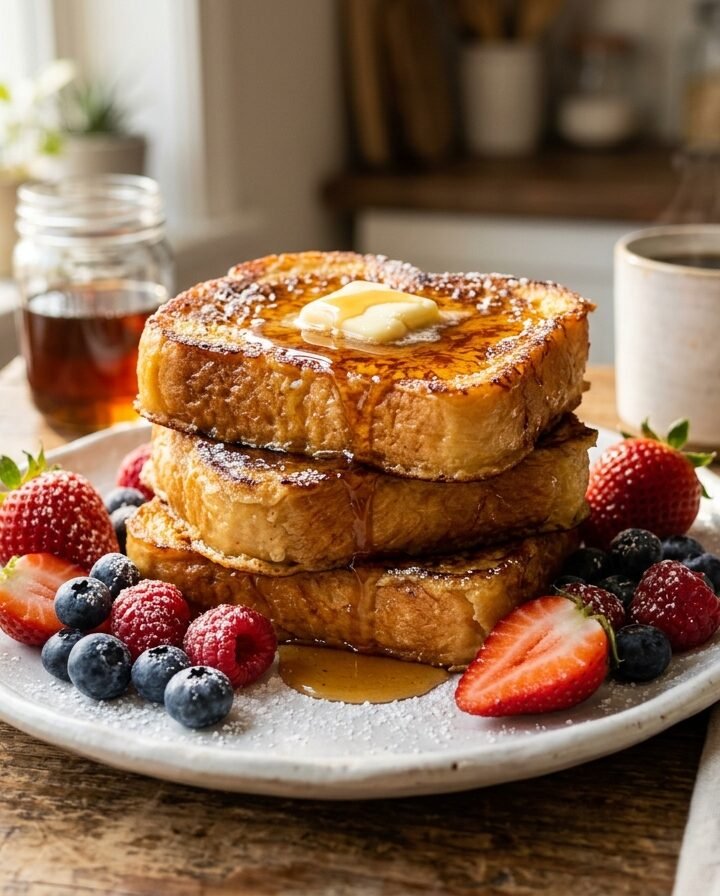
Few breakfast dishes are as comforting and satisfying as a plate of freshly made French toast. Thick slices of bread soaked in a rich mixture of eggs, milk, vanilla, and a touch of cinnamon are cooked until the outside becomes beautifully golden while the center stays soft, warm, and tender. Add a little butter and maple syrup on top, and you have a breakfast that feels special without requiring much effort.
French toast is also one of those recipes that can turn simple ingredients into something surprisingly delicious. You don’t need an expensive loaf of bread or complicated cooking equipment. In fact, this recipe is a wonderful way to use slightly stale bread that might otherwise be thrown away.
The beauty of homemade French toast is its flexibility. You can keep it traditional with maple syrup and powdered sugar, add fresh berries for a lighter breakfast, or make it more indulgent with caramelized bananas, whipped cream, chocolate, or a drizzle of honey.
In this guide, you’ll learn how to make classic French toast with a golden, slightly crisp exterior and a soft, flavorful center. We’ll also cover the best bread to use, common mistakes to avoid, topping ideas, storage instructions, and simple variations you can try at home.
Why You’ll Love This French Toast Recipe
This recipe is designed to be simple enough for a beginner while still producing the kind of French toast you’d happily order at a good brunch restaurant.
- Uses simple everyday ingredients.
- Ready in around 20 to 30 minutes.
- Perfect for breakfast or weekend brunch.
- Works with several different types of bread.
- Easy to customize with your favorite toppings.
- Great way to use slightly stale bread.
- Can be prepared for the whole family.
What Is French Toast?
French toast is a breakfast dish made by soaking slices of bread in an egg-based mixture and then cooking them in a skillet until golden brown.
Despite its name, variations of egg-soaked bread have existed in different cultures for centuries. The basic idea is wonderfully simple: instead of letting leftover bread go to waste, it is softened with a mixture of eggs and milk and then cooked until delicious.
The result is a dish with a lightly crisp exterior and a rich, custard-like center.
Ingredients You’ll Need
You only need a handful of ingredients to make classic French toast.
- 8 slices thick-cut bread
- 3 large eggs
- 3/4 cup milk
- 1 tablespoon granulated sugar
- 1 teaspoon vanilla extract
- 1/2 teaspoon ground cinnamon
- Pinch of salt
- 2 tablespoons butter, for cooking
For serving, you can use maple syrup, powdered sugar, fresh berries, sliced bananas, whipped cream, or any other toppings you enjoy.
Choosing the Best Bread
The bread you choose can make a major difference in the final texture of your French toast.
Thick slices of slightly stale bread are usually ideal because they can absorb the egg mixture without falling apart.
Excellent choices include:
- Brioche
- Challah
- Texas toast
- French bread
- Sourdough
- Thick white sandwich bread
Brioche and challah are particularly good choices because they have a rich texture and naturally contain enough structure to hold the custard mixture.
If your bread is very fresh and soft, leave the slices uncovered for a few hours or lightly toast them before dipping. Slightly dry bread absorbs the mixture more effectively.
How to Make French Toast Step by Step
Step 1: Prepare the Custard Mixture
Start by cracking the eggs into a wide, shallow bowl.
Add the milk, sugar, vanilla extract, cinnamon, and salt.
Whisk everything together thoroughly until the eggs are completely blended and the mixture looks smooth.
Make sure the cinnamon is distributed evenly throughout the mixture rather than sitting in small clumps on the surface.
Step 2: Heat Your Pan
Place a large non-stick skillet or griddle over medium heat.
Add approximately one tablespoon of butter and allow it to melt. The butter should become foamy but should not immediately turn dark brown or burn.
Keeping the heat around medium is important because French toast needs enough time to cook through without burning the outside.
Step 3: Dip the Bread
Take one slice of bread and place it into the egg mixture.
Let it soak for several seconds, then carefully turn it over so both sides are coated.
The exact soaking time depends on the thickness and dryness of the bread. Thick, slightly stale bread can usually handle more soaking than soft sandwich bread.
Don’t leave delicate bread submerged for too long because it may become overly soft and difficult to transfer to the pan.
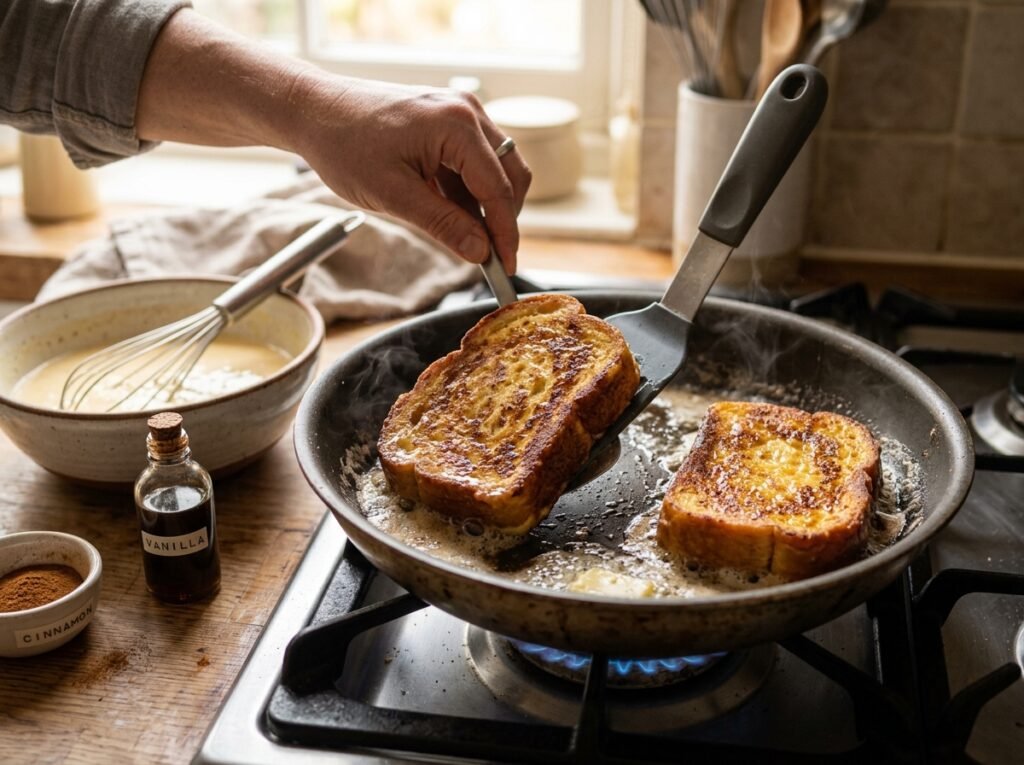
Step 4: Cook the French Toast
Carefully lift the soaked bread from the mixture and allow any excess liquid to drip back into the bowl.
Place the bread directly into the hot skillet.
Cook for approximately 2 to 4 minutes on the first side, or until the bottom becomes golden brown.
Then gently flip the slice using a spatula.
Cook the second side for another 2 to 3 minutes until it is golden brown and the center is cooked through.
Repeat the process with the remaining slices, adding a little more butter to the pan when necessary.
How to Make French Toast Golden and Crispy
Getting the outside of French toast beautifully golden while keeping the center soft is mostly about controlling the heat. Medium heat is usually the safest starting point. If the skillet is too hot, the bread can become dark before the egg mixture inside has cooked properly.
If the pan is too cool, however, the bread may absorb too much butter and become greasy instead of developing a pleasant golden crust.
Allow the pan to heat for a minute or two before adding the first slice. You should hear a gentle sizzle when the soaked bread touches the skillet. If you hear an aggressive sizzling sound and the butter begins smoking, reduce the heat immediately.
The Secret to Soft French Toast
The center of French toast should be soft and flavorful rather than dry. Choosing the right bread is the first step, but the egg mixture and soaking time matter too.
Thick-cut bread works particularly well because it provides enough structure to absorb the custard without falling apart.
Don’t rush the dipping process, but don’t leave the bread submerged for too long either. The goal is to moisten the bread throughout while keeping enough structure for it to be transferred easily to the pan.
For very thick slices, you can allow them to sit in the custard for a few extra seconds on each side. For thin sandwich bread, a quick dip is usually enough.
Best Toppings for French Toast
Classic French toast is delicious with nothing more than butter and maple syrup, but there are countless ways to make it more exciting.
Maple Syrup and Butter
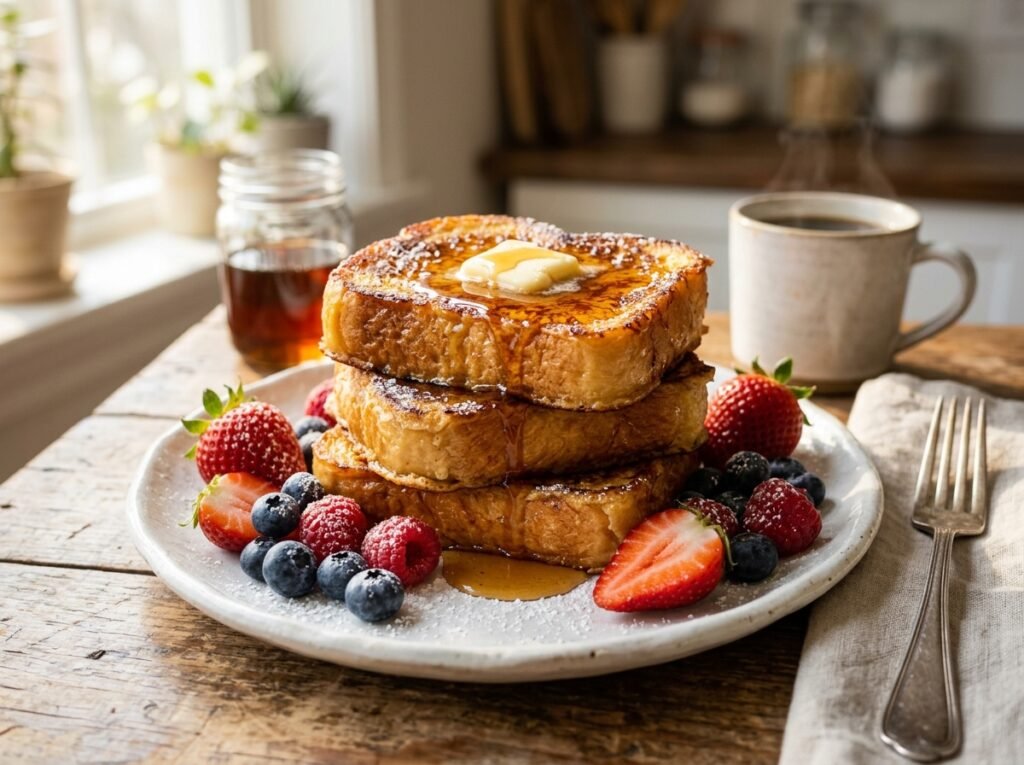
This is the classic combination. Place a small piece of butter over the warm French toast and drizzle with pure maple syrup. The butter melts into the surface while the syrup adds sweetness.
Fresh Berries
Strawberries, blueberries, raspberries, and blackberries add freshness and natural sweetness. A handful of berries also gives the finished dish a beautiful brunch-style presentation.
Powdered Sugar
A light dusting of powdered sugar is one of the easiest ways to make French toast look special. Use a fine sieve to sprinkle a small amount over the top immediately before serving.
Banana and Honey
Sliced bananas with a drizzle of honey make a simple and delicious combination. For an even richer version, lightly caramelize the bananas in butter before placing them on the French toast.
Whipped Cream
A small spoonful of whipped cream can turn French toast into an indulgent weekend dessert-style breakfast. Add berries and maple syrup for an especially attractive plate.
Nut Butter
Peanut butter, almond butter, or cashew butter adds richness and protein. Try pairing nut butter with sliced banana for a satisfying combination.
Easy French Toast Variations
Cinnamon French Toast
For a warmer flavor, increase the cinnamon slightly and add a tiny pinch of nutmeg to the custard mixture.
Vanilla French Toast
Increase the vanilla extract slightly for a stronger sweet and aromatic flavor. This works especially well when serving the French toast with fresh berries.
Chocolate French Toast
Add a small amount of cocoa powder to the custard mixture and serve the finished French toast with sliced strawberries and a little chocolate sauce.
Stuffed French Toast
For a special breakfast, place cream cheese, fruit preserves, or sliced bananas between two pieces of bread before dipping them into the custard. Cook gently so the filling warms without escaping.
Apple Cinnamon French Toast
Cook thinly sliced apples with butter, cinnamon, and a small amount of brown sugar until tender. Serve the warm apples over freshly cooked French toast for a comforting breakfast.
Common French Toast Mistakes to Avoid
Using Very Fresh Bread
Extremely fresh bread can become soggy when dipped into the custard. Slightly stale bread is usually better because it absorbs the mixture while maintaining its structure.
Soaking the Bread Too Long
There’s a difference between soaking and completely saturating the bread. If the bread becomes extremely soft before it reaches the pan, it may fall apart or become difficult to cook evenly.
Cooking at High Heat
High heat is one of the easiest ways to burn French toast. Medium heat allows the outside to brown gradually while the inside cooks properly.
Using Too Much Butter
Butter adds wonderful flavor, but excessive amounts can make the finished French toast greasy. Use enough to lightly coat the skillet and add more only when necessary.
Skipping the Vanilla and Cinnamon
These ingredients aren’t absolutely required, but they add much of the familiar French toast flavor. Even a small amount can make a noticeable difference.
How to Keep French Toast Warm
If you’re preparing breakfast for several people, you may need to cook the French toast in batches.
Place the cooked slices on a baking sheet and keep them in a low-temperature oven while you finish cooking. Avoid using excessive heat because the bread can dry out.
Try to serve the French toast as soon as possible for the best texture.
Can French Toast Be Prepared Ahead of Time?
Yes, French toast can be prepared ahead of time, although freshly cooked slices generally have the best texture.
If you need to prepare breakfast in advance, cook the French toast completely and allow it to cool. Store the slices in an airtight container in the refrigerator.
When you’re ready to serve them, reheat them in a toaster oven, skillet, or conventional oven until warmed through.
How to Store Leftover French Toast
Allow leftover French toast to cool before placing it in an airtight container.
Refrigerated slices are best consumed within a few days. For longer storage, you can freeze individual slices.
Place parchment paper between slices before storing them in a freezer-safe container or bag. This makes it easier to remove individual portions later.
Frozen French toast can be reheated directly in a toaster, oven, or air fryer until hot and crisp.
What to Serve With French Toast
French toast can be served as a complete breakfast with several simple side dishes.
- Fresh strawberries and blueberries
- Sliced bananas
- Greek yogurt
- Scrambled eggs
- Crispy breakfast potatoes
- Turkey or chicken sausage
- Fresh orange juice
- Coffee or tea
A combination of sweet and savory sides can create a balanced brunch plate that works especially well for weekend gatherings.
Frequently Asked Questions
What type of bread is best for French toast?
Thick-cut brioche, challah, Texas toast, French bread, and sourdough are excellent choices. Slightly stale bread generally works better than very fresh bread because it absorbs the custard without becoming too soft.
Why does my French toast get soggy?
Soggy French toast can result from soaking the bread too long, using very soft fresh bread, or cooking at a temperature that is too low. Use slightly stale thick bread and cook over steady medium heat.
Can I make French toast without vanilla?
Yes. Vanilla adds flavor but is not essential. You can make the recipe without it or replace it with another flavoring such as a little orange zest or additional cinnamon.
Can I use plant-based milk?
Yes. Unsweetened oat, almond, soy, or other suitable plant-based milks can be used. Keep in mind that different varieties may slightly change the flavor and texture.
Can French toast be frozen?
Yes. Cook the French toast completely, cool it, separate individual slices with parchment paper, and store them in a freezer-safe container or bag. Reheat them until hot before serving.
How do I make French toast extra crispy?
Use slightly stale bread, avoid oversoaking it, and cook it over medium heat with a light coating of butter. Allow each side to develop a golden crust before flipping.
Final Thoughts
Classic French toast proves that a great breakfast doesn’t have to be complicated. With a few slices of bread, eggs, milk, vanilla, cinnamon, and butter, you can create a warm and satisfying meal that feels far more special than the effort required to make it.
The key is paying attention to the small details. Choose bread with enough structure, don’t oversoak it, keep the skillet at a moderate temperature, and allow each side to develop a beautiful golden crust before flipping.
Once you have mastered the basic recipe, don’t be afraid to experiment. Add berries, bananas, cinnamon, chocolate, apples, nut butter, or your favorite toppings. French toast is incredibly flexible, which makes it perfect for both quiet weekday mornings and relaxed weekend brunches.
Most importantly, enjoy it while it’s warm. A stack of golden French toast, a little melted butter, and maple syrup is a simple breakfast combination that has earned its place as a timeless favorite.
Recipe Summary
- Prep Time: 10 minutes
- Cook Time: 15 minutes
- Total Time: Approximately 25 minutes
- Servings: 4
- Difficulty: Easy
- Best For: Breakfast and brunch