How to Make Fluffy Pancakes: Easy Homemade Recipe
There is something special about a warm stack of homemade pancakes in the morning. The smell of butter melting on a hot pan, the soft texture of freshly cooked pancakes, and a drizzle of maple syrup on top can turn an ordinary breakfast into something worth looking forward to. The best part is that you don’t need expensive ingredients or professional cooking skills to make delicious pancakes at home.
This easy homemade pancake recipe is designed for anyone who wants pancakes that are light, soft, fluffy, and golden brown on the outside. Whether you’re preparing breakfast for your family, making a weekend brunch, or simply craving something sweet in the morning, this recipe is simple enough for beginners and reliable enough to become a regular favorite.
The secret to fluffy pancakes isn’t complicated. The right balance of ingredients, gentle mixing, and proper cooking temperature can make a huge difference. Once you understand a few simple techniques, you’ll be able to make restaurant-style pancakes in your own kitchen.
Why You’ll Love This Pancake Recipe
There are hundreds of pancake recipes available, but a good everyday recipe should be simple, flexible, and consistent. This recipe checks all three boxes.
- Uses simple ingredients that are easy to find.
- Requires only a few minutes of preparation.
- Produces soft and fluffy pancakes.
- Works well for breakfast or brunch.
- Can easily be customized with different toppings.
- Suitable for beginner home cooks.
- Doesn’t require special kitchen equipment.
You can serve these pancakes with classic maple syrup and butter, or turn them into something more creative with fresh berries, bananas, whipped cream, chocolate chips, honey, peanut butter, or your favorite fruit sauce.
Ingredients You’ll Need
One of the best things about homemade pancakes is that you probably already have most of the ingredients in your kitchen.
- 2 cups all-purpose flour
- 2 tablespoons granulated sugar
- 1 tablespoon baking powder
- 1/2 teaspoon salt
- 1 3/4 cups milk
- 2 large eggs
- 4 tablespoons melted butter
- 1 teaspoon vanilla extract
These quantities make approximately 8 to 10 medium-sized pancakes, depending on how much batter you use for each pancake.
Ingredient Notes
Flour
All-purpose flour works perfectly for this recipe. It provides enough structure while still producing tender pancakes. For the best texture, measure the flour carefully rather than scooping a packed cup directly from the flour container.
Milk
Whole milk gives the pancakes a richer texture, but regular low-fat milk can also be used. If you prefer a slightly tangy flavor, buttermilk is an excellent alternative and can make pancakes especially tender.
Eggs
Eggs help bind the ingredients together and contribute to the structure and richness of the pancakes. For best results, allow them to come close to room temperature before mixing.
Butter
Melted butter adds flavor and helps create a tender texture. You can also use a neutral cooking oil if you prefer, but butter gives the pancakes a more traditional homemade taste.
Baking Powder
Baking powder is one of the most important ingredients in this recipe because it helps the pancakes rise as they cook. Make sure your baking powder is reasonably fresh for the best results.
Kitchen Equipment
You don’t need complicated equipment to make pancakes. A few basic kitchen tools are enough:
- Large mixing bowl
- Medium mixing bowl
- Whisk
- Measuring cups and spoons
- Non-stick skillet or griddle
- Spatula
- Ladle or measuring cup for the batter
How to Make Fluffy Pancakes Step by Step
Step 1: Prepare the Dry Ingredients
Start by adding the flour, sugar, baking powder, and salt to a large mixing bowl. Whisk everything together until the ingredients are evenly distributed.
This simple step is important because it prevents the baking powder and salt from becoming concentrated in one area of the batter. Even distribution helps the pancakes cook consistently.
Step 2: Mix the Wet Ingredients
In a separate bowl, whisk together the milk, eggs, melted butter, and vanilla extract.
Make sure the melted butter has cooled slightly before adding it to the eggs. If the butter is extremely hot, it can partially cook the eggs and create unwanted lumps.
Step 3: Combine Wet and Dry Ingredients
Pour the wet mixture into the bowl containing the dry ingredients.
Using a whisk or spatula, gently mix everything together until the flour is mostly incorporated.
Here’s one of the most important pancake-making tips: don’t overmix the batter.
A few small lumps are completely fine. Overmixing develops too much gluten in the flour, which can make the finished pancakes chewy and dense instead of soft and fluffy.
Step 4: Let the Batter Rest
Allow the pancake batter to rest for about 5 to 10 minutes before cooking.
This short resting period gives the flour time to absorb some of the liquid and allows the baking powder to begin working. The result can be a more consistent and tender pancake.
Step 5: Heat the Pan
Place a non-stick skillet or griddle over medium heat.
Allow the pan to warm gradually. If the pan becomes too hot, the outside of the pancake may brown too quickly while the center remains undercooked.
Lightly grease the cooking surface with a small amount of butter or neutral cooking oil.
Step 6: Cook the First Pancake
Pour approximately 1/4 cup of batter onto the heated pan for each pancake.
Allow the batter to spread naturally rather than pressing it down with a spoon. This helps maintain the thickness that gives pancakes their fluffy texture.
Cook the pancake until small bubbles begin appearing across the surface and the edges start looking slightly set.
This usually takes around 2 to 3 minutes, although the exact cooking time depends on the heat of your pan.
Step 7: Flip Carefully
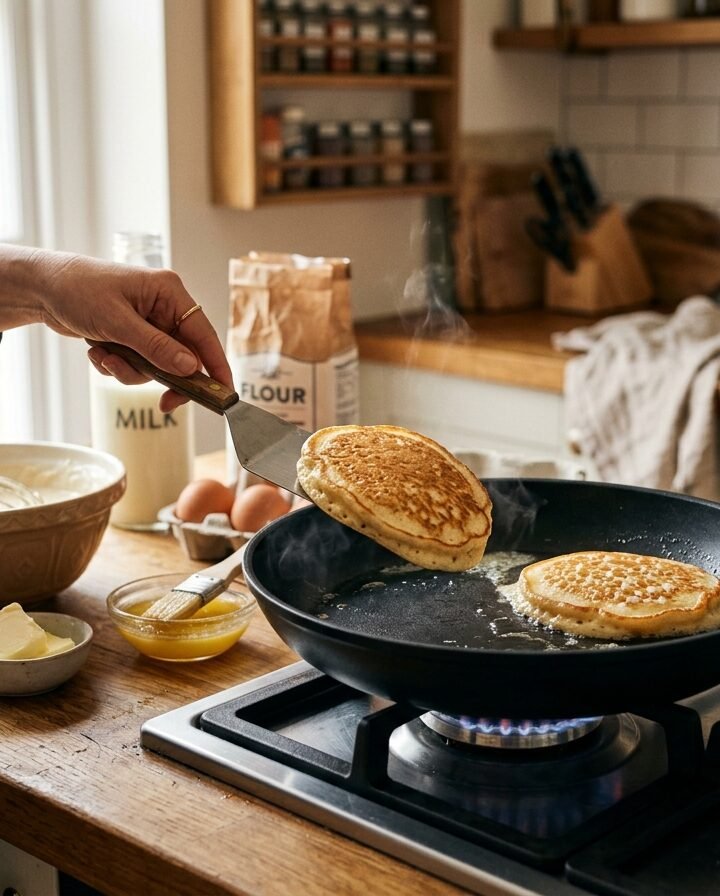
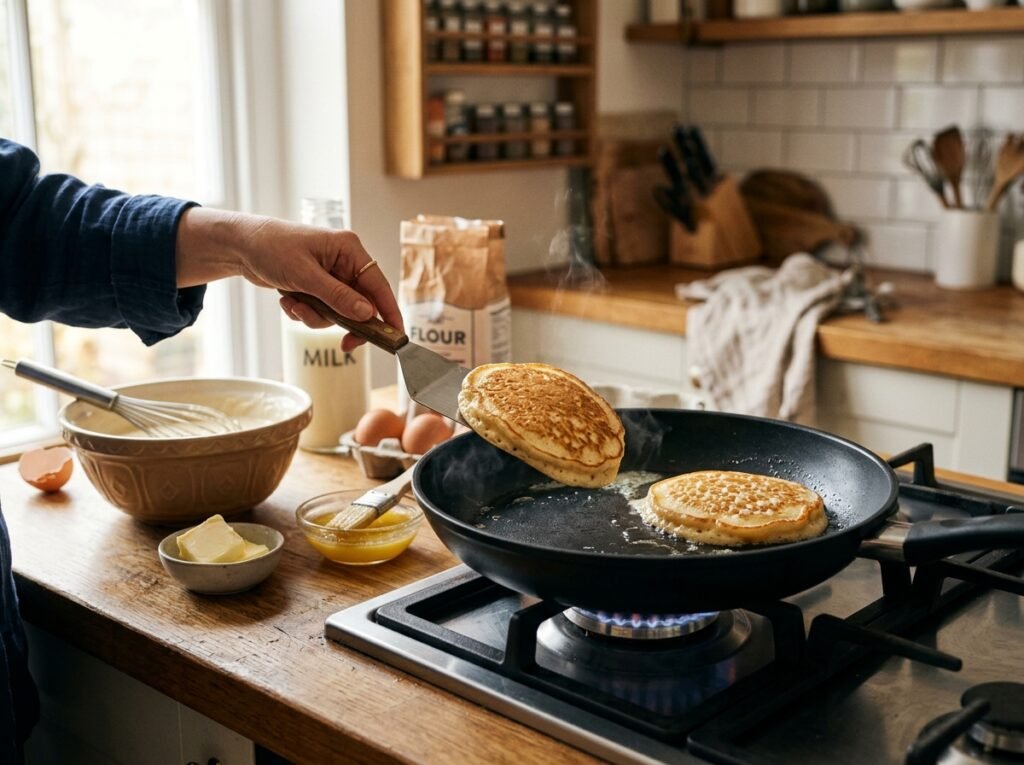
Once bubbles have formed and the underside is golden brown, slide a spatula underneath the pancake and flip it gently.
Cook the second side for another 1 to 2 minutes, or until it is golden brown and cooked through.
How to Get Extra-Fluffy Pancakes
If you want pancakes that are especially soft and fluffy, a few small details can make a surprisingly big difference. The first is to avoid overmixing the batter. Once the flour has been incorporated, stop mixing even if you can still see a few small lumps. Those little lumps usually disappear during cooking.
The second important factor is temperature. Pancakes need steady medium heat. A pan that is too hot can burn the outside before the center has finished cooking, while a pan that is too cool can produce pale, flat pancakes that take too long to cook.
Another useful trick is to avoid pressing the pancakes after flipping them. It may be tempting to use your spatula to flatten them, but doing so pushes out some of the air that gives them their light texture.
How to Know When a Pancake Is Ready to Flip
Knowing when to flip a pancake is easier than it might seem. Watch the surface carefully while it cooks.
When small bubbles begin appearing across the top and some of those bubbles start to pop, look at the edges. They should appear slightly dry and set rather than completely wet.
At this point, gently slide your spatula underneath the pancake. If the bottom is golden brown, it’s ready to flip.
After flipping, don’t move the pancake around too much. Let the second side cook undisturbed until it becomes golden brown and the center is fully cooked.
Best Toppings for Homemade Pancakes
Freshly cooked pancakes are delicious on their own, but toppings can turn a simple breakfast into something much more exciting.
Classic Butter and Maple Syrup
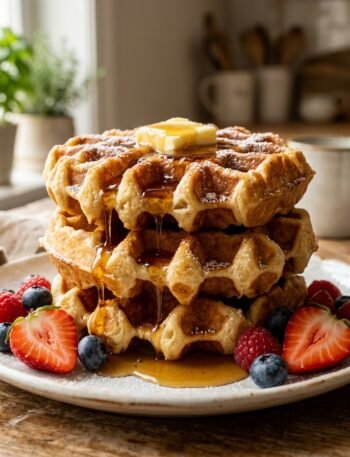
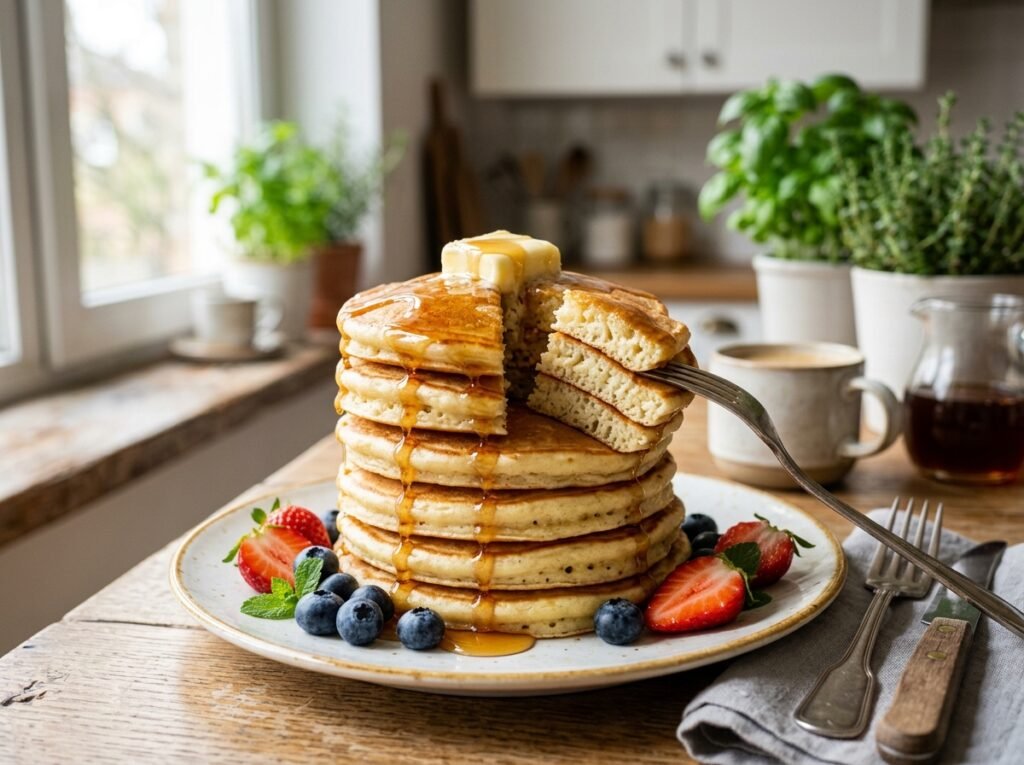
For a traditional breakfast, place a small piece of butter on top of a warm stack and pour maple syrup over it. The heat from the pancakes slowly melts the butter and creates a rich, sweet combination.
Fresh Fruit
Strawberries, blueberries, raspberries, bananas, and peaches are excellent pancake toppings. Fresh fruit adds natural sweetness, color, and a refreshing contrast to the warm pancakes.
Whipped Cream
A spoonful of lightly sweetened whipped cream can make pancakes feel more like a special weekend brunch. Add fresh berries and a little maple syrup for an easy presentation.
Chocolate
If you’re making pancakes for children or simply love chocolate, try adding chocolate chips to the batter or sprinkling them over the finished pancakes. A small drizzle of chocolate sauce can make them even more indulgent.
Nut Butter
Peanut butter, almond butter, or another favorite nut butter can add a creamy texture and rich flavor. Banana slices and a drizzle of honey pair particularly well with nut butter pancakes.
Easy Pancake Variations
Once you’ve mastered the basic recipe, you can easily customize it according to your taste.
Blueberry Pancakes
Fold fresh or frozen blueberries gently into the batter just before cooking. Avoid mixing them too aggressively because the berries can break apart and turn the batter purple.
Banana Pancakes
Mash one ripe banana and gently fold it into the prepared batter. Ripe bananas add natural sweetness and a soft texture.
Chocolate Chip Pancakes
Add a handful of chocolate chips to the batter. For evenly distributed chocolate, sprinkle a few chips onto each pancake immediately after pouring the batter into the pan.
Cinnamon Pancakes
Add approximately 1/2 teaspoon of ground cinnamon to the dry ingredients for a warm and comforting flavor.
Lemon and Blueberry Pancakes
For a fresh variation, add blueberries and a little finely grated lemon zest to the batter. The bright citrus flavor works beautifully with sweet berries.
Common Pancake Mistakes to Avoid
Even a simple pancake recipe can go wrong if a few basic techniques are overlooked.
Overmixing the Batter
This is probably the most common mistake. Mixing the batter until completely smooth can develop too much gluten and result in tough pancakes.
Using Excessive Heat
High heat can make pancakes brown too quickly. Medium heat gives the center enough time to cook while creating an attractive golden exterior.
Flattening the Pancakes
Don’t press down on pancakes while they’re cooking. Keeping the air inside helps maintain their fluffy texture.
Skipping the Resting Period
Although you can cook the batter immediately, allowing it to rest for a few minutes gives the flour time to hydrate and can improve the texture.
Adding Too Much Batter
Very thick pancakes can be difficult to cook evenly. Using approximately 1/4 cup of batter for a medium pancake provides a good balance between thickness and cooking time.
Can You Make Pancake Batter Ahead of Time?
For the best results, pancakes are generally better when the batter is freshly prepared. If you need to save time in the morning, you can measure the dry ingredients in advance and keep them covered in an airtight container.
When you’re ready to cook, simply add the wet ingredients and prepare the batter.
This method can make breakfast preparation much faster without sacrificing the texture of the pancakes.
How to Store Leftover Pancakes
If you have leftover pancakes, allow them to cool completely before storing them.
Place the pancakes in an airtight container or sealed food-storage bag and refrigerate them. Properly stored pancakes can generally be enjoyed within a few days.
For longer storage, pancakes can be frozen. Place a sheet of parchment paper between individual pancakes so they don’t stick together, then store them in a freezer-safe container or bag.
When you’re ready to eat them, reheat them in a toaster, oven, skillet, or microwave until warmed through.
How to Serve Pancakes for a Family Breakfast
If you’re serving pancakes to several people, it’s helpful to keep the cooked pancakes warm while you finish the remaining batter.
Place the cooked pancakes in a warm oven or cover them loosely while you continue cooking. Avoid keeping them at very high temperatures for too long because they can become dry.
Serve the pancakes as a stack with butter, maple syrup, fresh fruit, and any additional toppings your family enjoys.
Frequently Asked Questions
Why are my pancakes not fluffy?
The most common reasons are overmixing the batter, using old baking powder, using excessive heat, or pressing the pancakes while they cook. Mix the batter gently and cook the pancakes over steady medium heat.
Can I use buttermilk instead of regular milk?
Yes. Buttermilk can give pancakes a slightly tangy flavor and a particularly tender texture. If you use buttermilk, you may need to adjust the liquid slightly depending on its thickness.
Can I make pancakes without butter?
Yes. You can replace melted butter with a neutral cooking oil. However, butter provides a richer flavor and is a popular choice for classic homemade pancakes.
Can I freeze homemade pancakes?
Yes. Allow the pancakes to cool completely, separate them with parchment paper, and store them in a freezer-safe container or bag. Reheat individual pancakes whenever you need them.
What is the best temperature for cooking pancakes?
Medium heat is generally a good starting point. Because every stove and pan is different, adjust the temperature if the pancakes are browning too quickly or taking too long to cook.
How do I make pancakes without eggs?
You can use an appropriate egg substitute such as mashed banana, applesauce, or a commercial egg replacer. Keep in mind that substitutions can change the flavor and texture of the finished pancakes.
Final Thoughts
Making fluffy homemade pancakes doesn’t require complicated techniques or expensive ingredients. With a simple combination of flour, milk, eggs, butter, sugar, baking powder, and a little patience, you can create a delicious breakfast that tastes far better than many packaged alternatives.
The biggest secrets are surprisingly simple: don’t overmix the batter, give it a short rest, keep your pan at a moderate temperature, and resist the temptation to press the pancakes while they’re cooking.
Once you have mastered this basic recipe, you can make it your own with blueberries, bananas, chocolate chips, cinnamon, fresh berries, whipped cream, or your favorite toppings. That’s what makes homemade pancakes so enjoyable—they provide a simple starting point that can become something completely different every time.
So the next time you’re looking for an easy weekend breakfast, skip the boxed mix and make a fresh batch from scratch. Warm, fluffy pancakes topped with butter and maple syrup are a simple pleasure that never really goes out of style.
Recipe Summary
- Prep Time: 10 minutes
- Resting Time: 5–10 minutes
- Cook Time: 15 minutes
- Total Time: Approximately 30–35 minutes
- Servings: 8–10 pancakes
- Difficulty: Easy